High and Low.
For all its visual prowess and ambition, this acclaimed great is ultimately a devastating bore.
The low points.
The paradox of High and Low is that its greatest strength is also its greatest weakness. Few films are as visually assured. Kurosawa’s command of space, his precise blocking of actors within the frame, and his use of black-and-white photography produce images of remarkable clarity and power. Yet as a modernist crime thriller, hoping to hold a lens up to the socioeconomic conditions of a rapidly changing Japan, it is painfully light on substance beneath its stylistic veneer. The craftsmanship is undeniable; its moral underpinnings less so.
This isn't the original theatrical trailer, but it sure is stylish
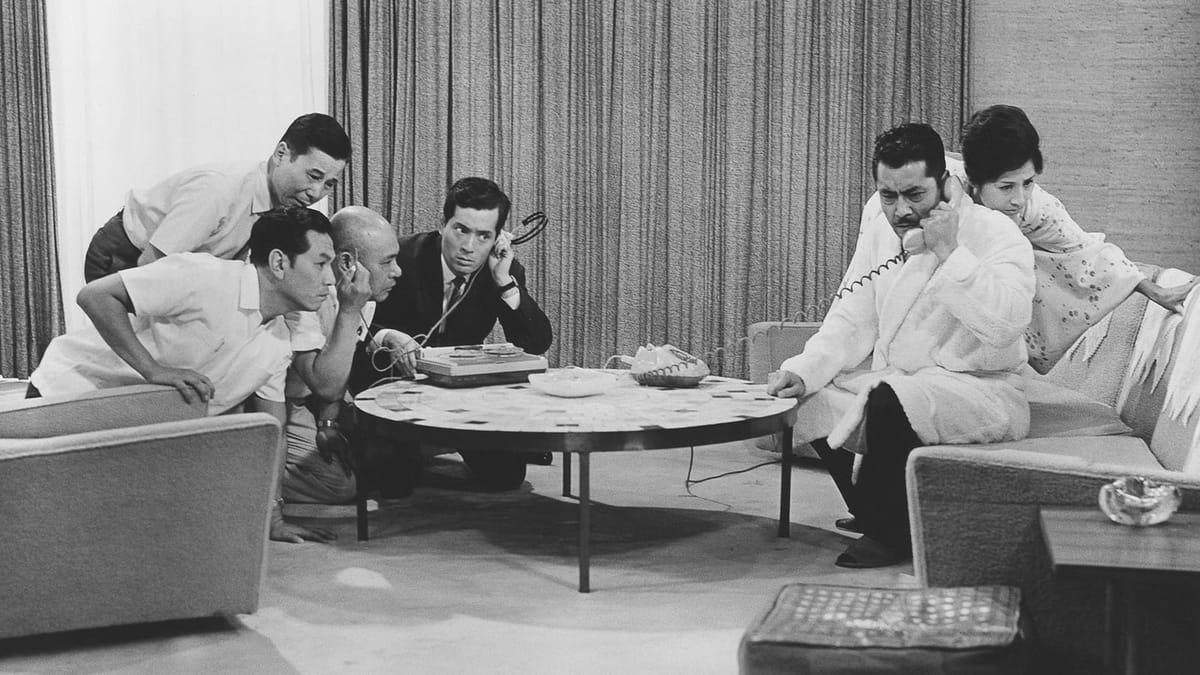
The film has two distinct halves. The first, establishes the premise and the moral dilemma. A kidnapping gone wrong, where the kidnapper believes to have the child of Gondo (the wealthy executive of a shoe company). Only, he has the chauffeur’s child instead. Now will Gondo still pay the ransom at the risk of losing everything. His job. His social standing. Money borrowed against the very house that serves as ground zero of his moral battlefield?
The film’s reputation rests presumably on its portrayal of weighty social concerns, but these concerns remain frustratingly abstract. The kidnapper is presented as an intelligent but not psychologically coherent vessel for an idea: resentment from be-low directed up-high at privilege. We are shown the physical geography of the class divide, yet the film never grants its antagonist enough interiority for that conflict to become genuinely tangible or poignant. His actions seem to emerge less from character or circumstance than from thematic necessity.
After he is apprehended and when the principal characters finally face off, there is still no gut punch that inverts expectations. The antagonist even teases, threatening to tell all—and just as you lean forward—doesn’t. Kurosawa chooses instead, to reduce him to a quivering, apoplectic lunatic, whose motivations are laughably inadequate—a room too cold in winter and too warm in summer, hateful of the house on the hill, that looks down upon him. Lunatics have their own twisted logic. But at least they have one.
The second, the Low half, dissolves what began as a tightly wound moral thriller and procedural spectacle into a lengthy excursion through the city’s nightlife and drug underworld—the world our low life antagonist inhabits.
This section is praised for its atmosphere, and the appeal is certainly there, but atmosphere alone cannot sustain dramatic momentum. The investigation expands outward while the film’s central dilemma recedes into the background.
Scenes accumulate, details multiply, yet the story feels suspended in limbo, its aimless meandering increasingly suggestive of how the director may have lost his way and the plot. What first appears to be Kurosawa indulging his fascination for the seedy underside may in fact betray difficulties with advancing the conflict that originally gave the film its urgency.
Ultimately, what disappoints is not so much that the film lacks answers but that it abandons the questions it raises. The opening movement establishes a genuine moral crisis: how much should one sacrifice for the life of another? It is a dilemma rich enough to sustain an entire film. Yet rather than deepening this conflict, High and Low sidesteps it.
For all its acclaim as a work of social commentary, the film’s observations on class often feel more declarative than insightful. The contrast between the heights and the depths is repeatedly emphasised, yet the film rarely moves beyond the statement that such divisions exist. What is presented as social commentary is little more than visual symbolism. The themes are visible everywhere and explored almost nowhere.
Like they always do, this StudioBinder video essay lays bare the film's machinations
To contrast, Bong Joon-ho’s Parasite understands that class is not a backdrop but a force acting upon character. The Kim family’s decisions, deceptions, ambitions, and eventual violence emerge directly from their social position. In High and Low, class often feels decorative by comparison. The film presents inequality as an abstraction rather than an engine of behaviour. The kidnapper’s resentment exists because the plot requires it, not because the film has persuaded us of its origins.
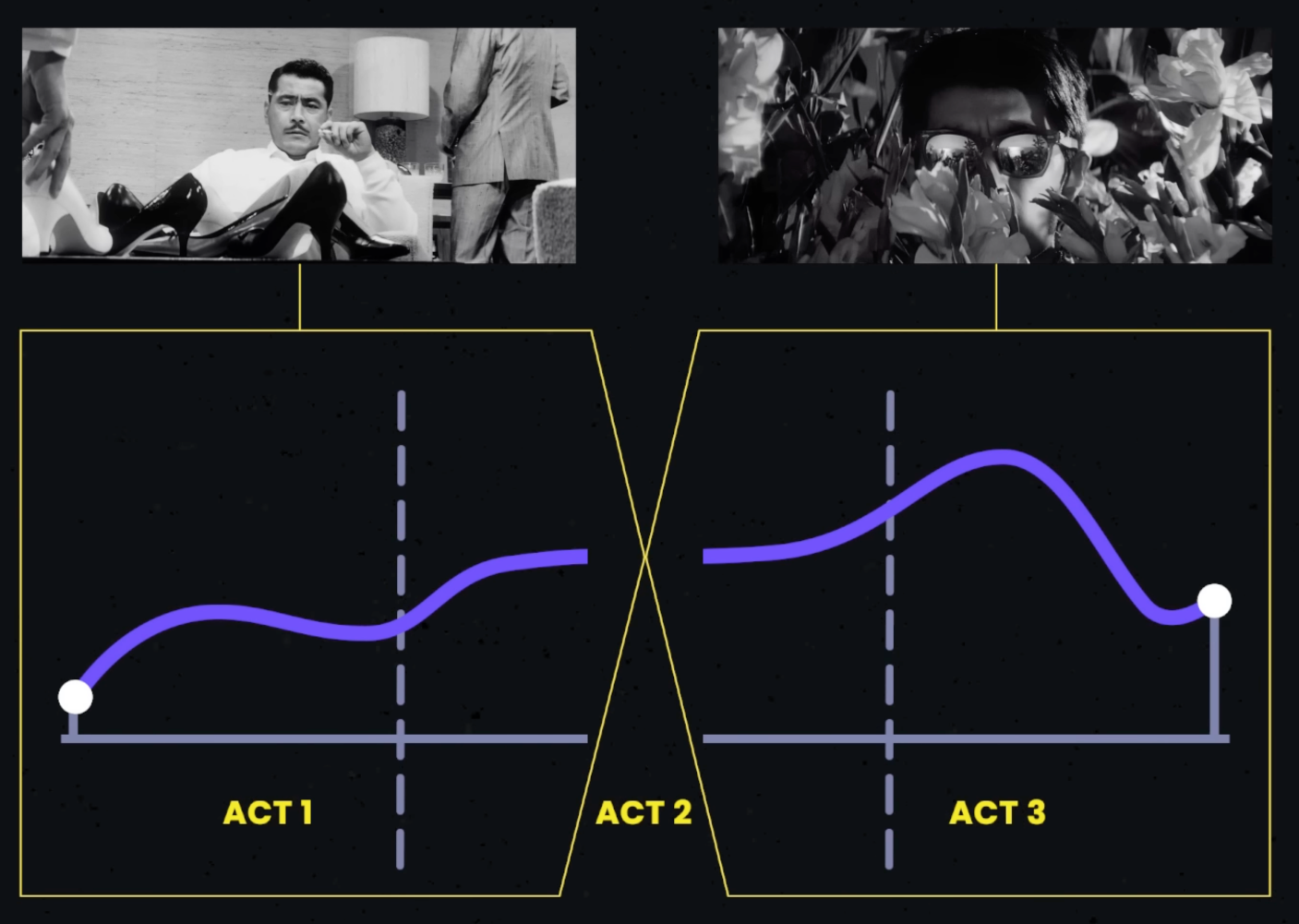
This leaves the film with a peculiar shape. The first half promises confrontation, resolution, and catharsis. The second half continually postpones them. By the time the film arrives at its conclusion, one is left less with the sense of a completed dramatic arc than of a problem that has simply exhausted itself.
One cannot shake the feeling that Kurosawa has already picked his side. The others, those he has abandoned and on the down and out, are divested of dignity and their story to tell.
High and Low is a film of extraordinary formal intelligence whose emotional and intellectual ambitions never seem to match its visual achievements. One can admire nearly every frame while remaining unmoved by the story those frames are meant to tell.